

Lessons from Red Flag: How High-Pressure Situations Elevate Performance

Leading When You Don’t Have the Answers (Part 2)
What separates leaders who simply manage uncertainty from those who truly lead through it comes down to behavior and execution: how they respond to mistakes, how they make decisions, and how they show up under pressure. From learning openly through failure to resisting the pull of the 'Value Valley,' this article offers a practical and honest roadmap for leading with courage, humility, and vision when the path forward is anything but certain.
Leading When You Don’t Have the Answers (Part 1)
There are moments in leadership when the truth is simple: we don’t know what we don’t know. The situation is uncertain, the path forward is unclear, and yet the team is looking to us for direction. In those moments, leadership is not about having every answer. It’s about how we show up even when we don’t have a clear answer.
Artificial Intelligence: It's Everywhere! What is Important to Know? (Part 2)
AI is a tool. It enhances human effort and effectiveness – it is not yet a wholesale replacement for human workers, with some exceptions. I have studied AI for at least a half-dozen years, reading something AI-related nearly every single day. Why? Because it is ubiquitous. Every organization and executive leader I engage with is talking about this subject. They are determining or delivering AI-related strategy and from my research and analysis, I know that strategy must include the human‑to‑machine interface – with a human‑first approach.
Drawing on years of research and readings across leading business, technology and organizational frameworks (such as Gartner, McKinsey, Harvard, etc.), I have identified five factors – what I call the five “Ps” – that every organization, public or private, for profit or non-profit, must consider when implementing AI. They are: Purpose, People, Policy, Process, and Platform.
Artificial Intelligence: It's Everywhere! What is Important to Know? (Part 1)
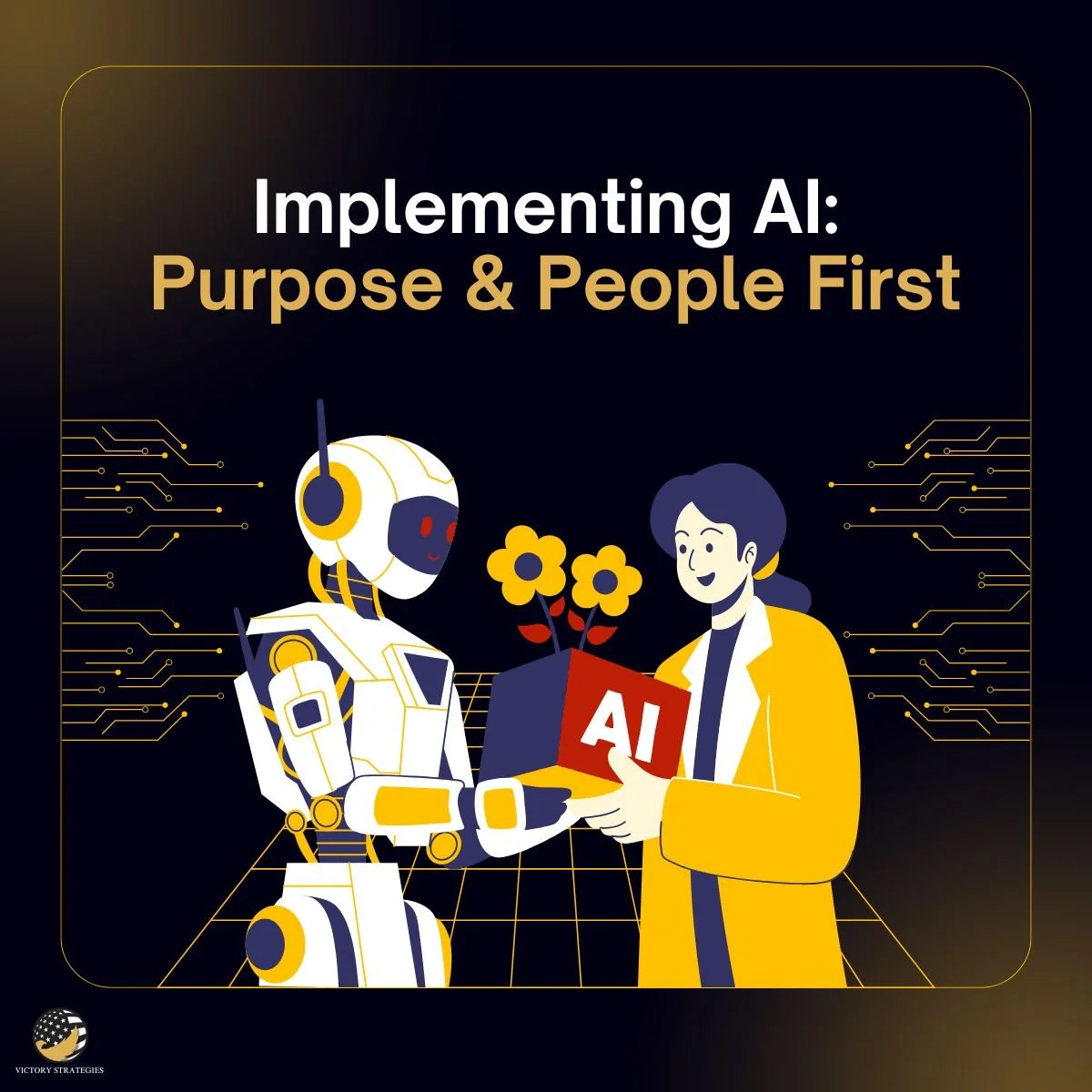
AI is a tool. It enhances human effort and effectiveness – it is not yet a wholesale replacement for human workers, with some exceptions. I have studied AI for at least a half-dozen years, reading something AI-related nearly every single day. Why? Because it is ubiquitous. Every organization and executive leader I engage with is talking about this subject. They are determining or delivering AI-related strategy and from my research and analysis, I know that strategy must include the human‑to‑machine interface – with a human‑first approach.
Drawing on years of research and readings across leading business, technology and organizational frameworks (such as Gartner, McKinsey, Harvard, etc.), I have identified five factors – what I call the five “Ps” – that every organization, public or private, for profit or non-profit, must consider when implementing AI. They are: Purpose, People, Policy, Process, and Platform. In this two-part series, we will explore all five. Today, we begin with Purpose and People.
Goals Aren’t Wishes: A Practical Framework for Real Progress

This time of year, many folks revisit last year’s resolutions and wonder what went wrong. The hopes of a new year, often drowned out by the realities of life. So, why is it so difficult to achieve goals? Often, we attribute failure to a lack of discipline - and there may be some truth to that. But, that explanation leaves individuals with little guidance outside of “try harder next year.” If you truly want to make progress in both your personal and professional life, consider refining your goal setting process.
Strategy Implementation: Attribute Three - Accountability Mechanism and Process
Successful strategy execution requires a well-defined accountability mechanism composed of three interconnected elements: people, process and leadership oversight. Together, these elements create a disciplined system that drives follow-through, maintains focus, and ensures that strategic objectives are translated into measurable results.
Strategy Implementation: Attribute Two - Coaching the Implementation Team

Strategies rarely fail because the vision is flawed; more often, they fail because employees lack the guidance, skill development, and confidence needed to execute effectively. When implementing a strategy, key members of the team must receive dedicated coaching and support from both subject-matter and technical experts.
Strategy Implementation: Attribute One - Senior Leader Champion

Strategy Implementation: Turning Plans into Action - Three Key Attributes for Success

I have seen many well-intentioned organizations draft catchy vision statements, spend significant energy developing a strategy, and then fall flat in execution after the strategic masterpiece is unveiled. A well-crafted strategy is only as strong as its execution. While organizations invest significant time and resources in designing strategies, many fall short when it comes to implementation. Strategy implementation is the critical bridge between planning and results—it ensures that intentions are translated into measurable performance.